ORLOVAČKO JEZERO
THE HEART OF ZELENGORA AND THE MOST BEAUTIFUL MOUNTAIN AMPHITHEATER OF THE BALKANS
In the very heart of the Zelengora mountain, within the boundaries of the Sutjeska National Park, lies Lake Orlovačko. At an altitude of 1,438 meters above sea level, this glacial lake is a central point for all explorers of the Herzegovinian mountains. Its crystal clear water, framed by some of the highest peaks of Zelengora, creates a scene reminiscent of the most beautiful alpine landscapes.
Natural features: “Mountain Eye” at the foot of Orlovec
Lake Orlovačko is one of the eight glacial lakes of Zelengore. With an average depth of about 5 meters, a length of 350 meters and a width of about 100 meters, it is the ideal size to fully enjoy the peace it provides.
Surroundings: The lake is protected by grandiose peaks. On the eastern side, Orlovac and Orlovača dominate, on the southeast rises the highest peak of the mountain – Bregoč (2014 masl), on the south are Stogi, while the northern side is guarded by the karst Ljeljen.
WHAT CAN A PHOTOGRAPHER EXPECT?
For a landscape photographer, Lake Orlovačko is a dream destination. Here’s what you can “catch”:
Symmetry and reflection: Because of the shelter of the peaks, the surface of the lake is often as still as a mirror. Photographing the peak of Orlovac reflected in the water is an absolute classic.
Astrography: Zelengora has one of the clearest night skies in the region. Photographing the Milky Way from above a tent set up next to a lake provides unreal results without light pollution.
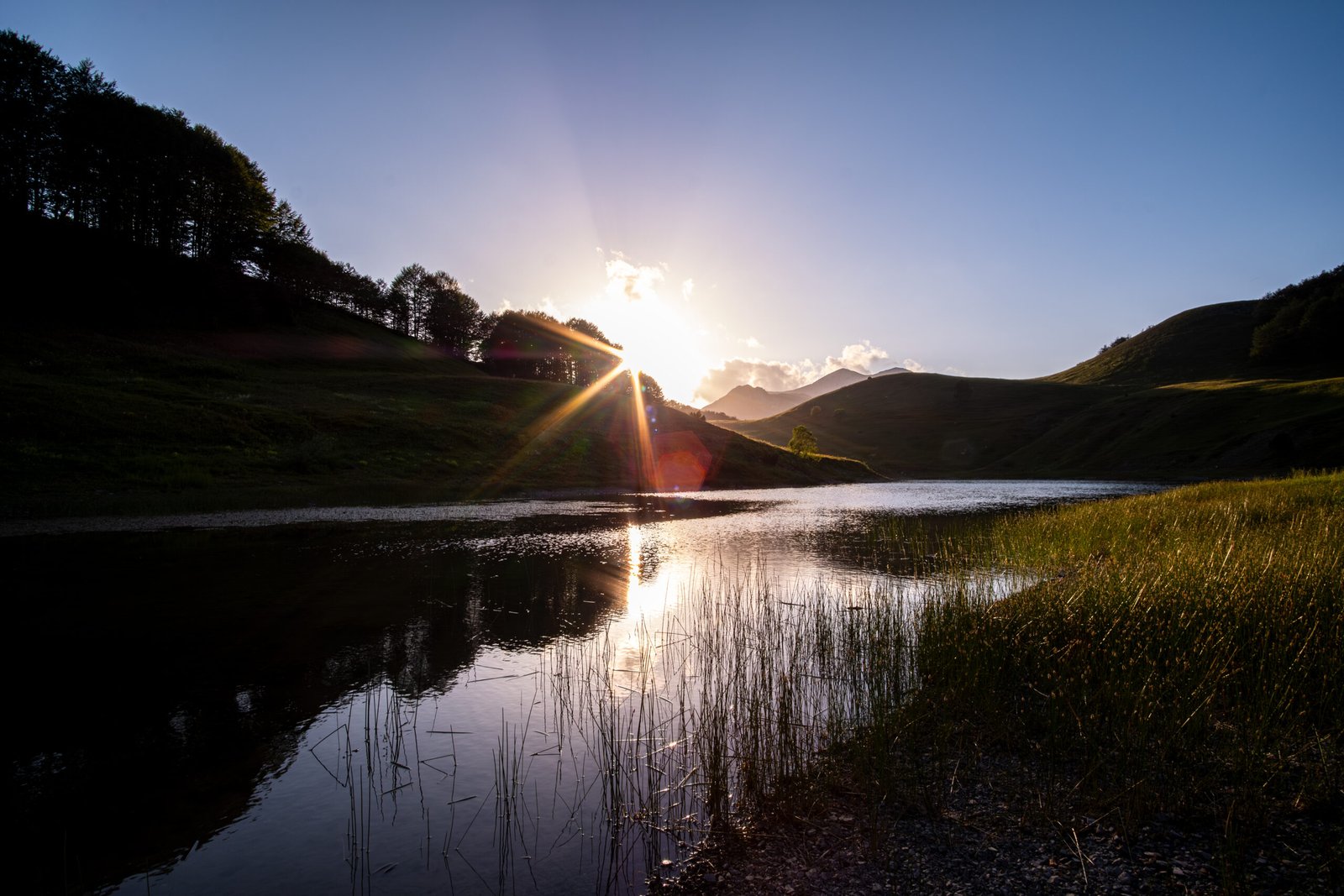
Golden hour: When the sun begins to set behind Bregoč, the rocks of Orlovec take on an intense orange and red color, creating a perfect contrast with the turquoise water.


LIFE IN PRIVATE NATURE
Flora: The surroundings of the lake are rich in blueberries, cranberries and medicinal herbs. In July and August, the meadows are covered with colorful mountain flowers.
Fauna: The lake is rich in brook trout, which attracts anglers (with a permit). Chamois, roe deer and bears can be found in the area, while bald eagles fly across the sky, after which the lake and nearby peaks are named.
TIPS FOR THE STAY
Camping: Lake Orlovačko is the most popular base for camping on Zelengora. There is a designated area for tents, but bring a warm bag – temperatures drop drastically at night even in summer.
Water: There are several sources of drinking water near the lake, but it is best to seek them out with the help of more experienced hikers or locals.
Ecology: Please take all trash with you. Zelengora survives only thanks to the responsibility of its visitors.
HOW TO COME?
Getting to Lake Orlovac is a real little expedition that requires patience and, if possible, an all-terrain vehicle.
Direction from Kalinovik: The most common route leads through the town of Kalinovik. From Kalinovik, it continues on a macadam road over the Čemerno pass and the Jabučka stijena plateau. The road is about 25-30 km long and passes through the incredible areas of the Sutjeska National Park.
Direction from Tjentište: There is also a road that leads from Tjentište over the pass of Donje Bare, but it is often more difficult to walk and longer.
Note: Macadam roads are impassable in winter, and in spring and autumn they can be challenging for smaller passenger vehicles due to potholes and mud Visit Foča.
General emergency numbers (BiH)
124 – Emergency services
122 – Police
123 – Firefighters
121 – Civil protection
Mountain Rescue Service (GSS)
GSS is the only service trained for rescue from the inaccessible mountain peaks of Zelengora:
GSS Station Foča: +387 65 315 540 (primary station for this area) Visit Foča.
GSS Station Kalinovik: +387 65 241 833 (if approaching Orlovačka jezera from the north).
GSSuBiH Operations Center: +387 62 111 000.
Sutjeska National Park (Tjentište)
Directorate / Info center: +387 58 233 130 Sutjeska National Park.
Surveillance Service (Rangers): +387 58 233 102.
IMPORTANT NOTICE
When you hike through the heart of Sutjeska National Park, especially around Zelengora and its lakes, you enter the home of the brown bear. Although encounters are rare, it is necessary to know how to behave in “bear country”.
Here are some concise guidelines for a safe stay in the bear habitat on Zelengora:
Announce yourself: Make noise (conversation, song, banging sticks) to avoid the surprise.
Food outside the tent: Keep smelly food and garbage away from the sleeping area, ideally hung on a high branch.
No running: If you see a bear, stay calm, don’t turn your back and slowly back away while talking in a deep GSS.ba voice.
Cubs are a red alert: Never approach the young; the mother is then the most dangerous and ready to attack for protection.
Watch the ground: Avoid trails with fresh paw prints or droppings.